
What Are the Assessment Techniques for the QQI?

Nobody wants a surgeon who has only passed a multiple-choice quiz.
No employer, too, would want to hire a person who only knows how to write essays.
Thus, in the world of QQI, the term ‘exam’ is the least interesting part of the story.
From high-stakes ‘Skills Demonstrations’ to building professional portfolios, the way learners are assessed is actually a preview of their future career. So, QQI traded the final exam for a suite of 6 high-impact techniques that prove that a candidate is READY!
If you want to understand what the examiner is looking for and how you can live up to their expectations, the answer lies in this blog. Just don’t stop reading!
Knowing All 6 Assessment Techniques for QQI Certification
Greetings to all dedicated students.
This is an open letter to all the learners currently enrolled in a QQI-accredited program.
First things first, forget everything you hate about school exams. We know how there is nothing worse than sitting in a silent hall for three hours trying to remember a definition you will never use again. But not just us, the Quality and Qualifications Ireland (QQI), a formal certification, also found it unfair. They replied to this custom by breaking the mould.
They decided they would rather test your nerves, your hands, and your habits.
So, What Does It Look Like?
- A pile of carefully-organised sketches.
- A 10-minute live demonstration under a supervisor’s watchful eye.
- A digital portfolio that looks more like a resume than a test paper.
This is what an ‘EXAM’ looks like in 2025.
If you’re still expecting a pen-and-paper slog, you should go through the following 6 new ways of getting tested in the modern world. For instance, there is this prestigious ILM Assignment, where you have to attempt a work-related test in the form of an essay.
Through it, instructors want the students to demonstrate what they understood in a lesson.
- Assessment Technique #1 – Assignment
This is a written piece of work where you answer a specific question or solve a problem based on a ‘brief’ your teacher gives you. It usually has a set word count and a deadline.
What to do: You need to start by reading the brief twice. Then use the exact headings the teacher provides, as this makes it easy for the assessor to see you have covered every requirement. It will also help you get the marks you want.
- Assessment Technique #2 – Collection of Work (Portfolio)
You already know what a portfolio is. Now, you just have to have your own professional folder that grows over time. It can be a series of smaller tasks, drawings, or documents that prove you have mastered various parts of the course.
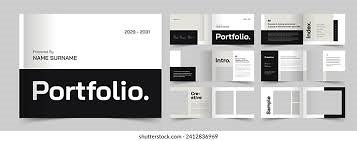
What to do: Start by staying organised from the first week. You might also want to label every page clearly and keep a ‘Table of Contents’ at the front. This is important because a tidy, well-sequenced portfolio shows the assessor that you are a disciplined and consistent learner.
- Assessment Technique #3 – Examination (Theory/Practical)
The third approach is making the student appear in a traditional, timed test where they answer questions under supervision. It is supposed to test how much information they have actually remembered and understood without using their notes or the internet.
What to do: They must focus on key definitions and ‘action verbs’ like Identify, Argue, Discuss, Describe, or Explain. Also, it would be great if they practice with past papers to get used to writing quickly under pressure before the big day arrives.
- Assessment Technique #4 – Learner Record
This is a personal logbook or diary. Unlike an essay, this is about YOU. The student is asked to record what they did in class, how they handled challenges, and what they learned about themselves.
What to do: One should not just start listing what happened. They should be using ‘reflective language, and instead of saying ‘We practised first aid’ they should be saying ‘I struggled with the bandage technique at first, but I realised that slowing down helped me improve.’
- Assessment Technique #5 – Project
The fifth one is a project. It is an in-depth study of one specific topic. It usually involves research, planning, and creating a final report or a physical product such as a website or a piece of furniture. It might seem very challenging, but it is not that tough.
What to do: First, show your ‘trail’ and keep your rough notes, sketches, and early research up to the mark. All these things will help the assessors see that the journey you took to get to the final result was indeed a fair one.
- Assessment Technique #6 – Skill Demonstration
Last but not least, Skills Demonstration is a practical ‘live’ test where you perform a task in front of the assessor. For example, if you are studying healthcare, you might demonstrate how to safely move a patient. Or maybe how to pitch a new idea to the investor.
However, this is something not usually required at the initial levels. It will always be QQI Level 1 Assignment and QQI Level 3 Skills Demonstration.
What to do: You should have enough practice with this task until the movement becomes muscle memory. Other than that, when you perform the task, talk through what you are doing. Finally, explain the ‘why’ out loud to prove that you are competent.
Assessments Focused on Each Level
The type of assessment techniques is likely to vary significantly by the level:
- Levels 1-3: The focus is on foundational skills. Thus, assessment usually happens through a collection of work, simple skills demonstrations, and basic learner records.
- Levels 4-5: At these levels, the valuations begin to incorporate broader knowledge and require some theoretical understanding. So, you’ll get a mix of assignments, projects, skills demonstrations, and potentially theory-based examinations.
- Levels 6 and Higher: For higher levels like these, learners are expected to work on projects involving theory, independent work, and problem-solving.
FAQs
- Who designs the specific assessments?
They are usually designed by the educational or training providers. They are the people who are responsible for devising the specific assessment instruments, like an assessment brief, exam paper, and marking schemes.
- How are fairness and consistency ensured?
The authorities who make and check the tests have quality assurance procedures. They also have internal verification and external authentication processes to ensure that everything is fair, valid, reliable, and consistent.
- Can group work be assessed?
Yes, group or team work may be part of an assessment. Hence, it is important for each learner to participate and then get graded for their role in the assignment.
The Final Words
So, to give you the final word of the discussion, we have to say this: Stop treating QQI assessments like a checklist of chores. This is the main reason why almost every 2 in 3 students in struggling right now. But then what should one do? We have the answer.
You may think of the QQI assessment framework as a psychological map designed to see how you handle real-world pressure. From the ‘Learner Record’ (which is basically a professional diary) to ‘Skills Demos’ (the ultimate live performance), each of the approaches is merely an outline for your professional identity.